When Bonobos Drop by the Inkomu Camp and Captivate Their Hosts
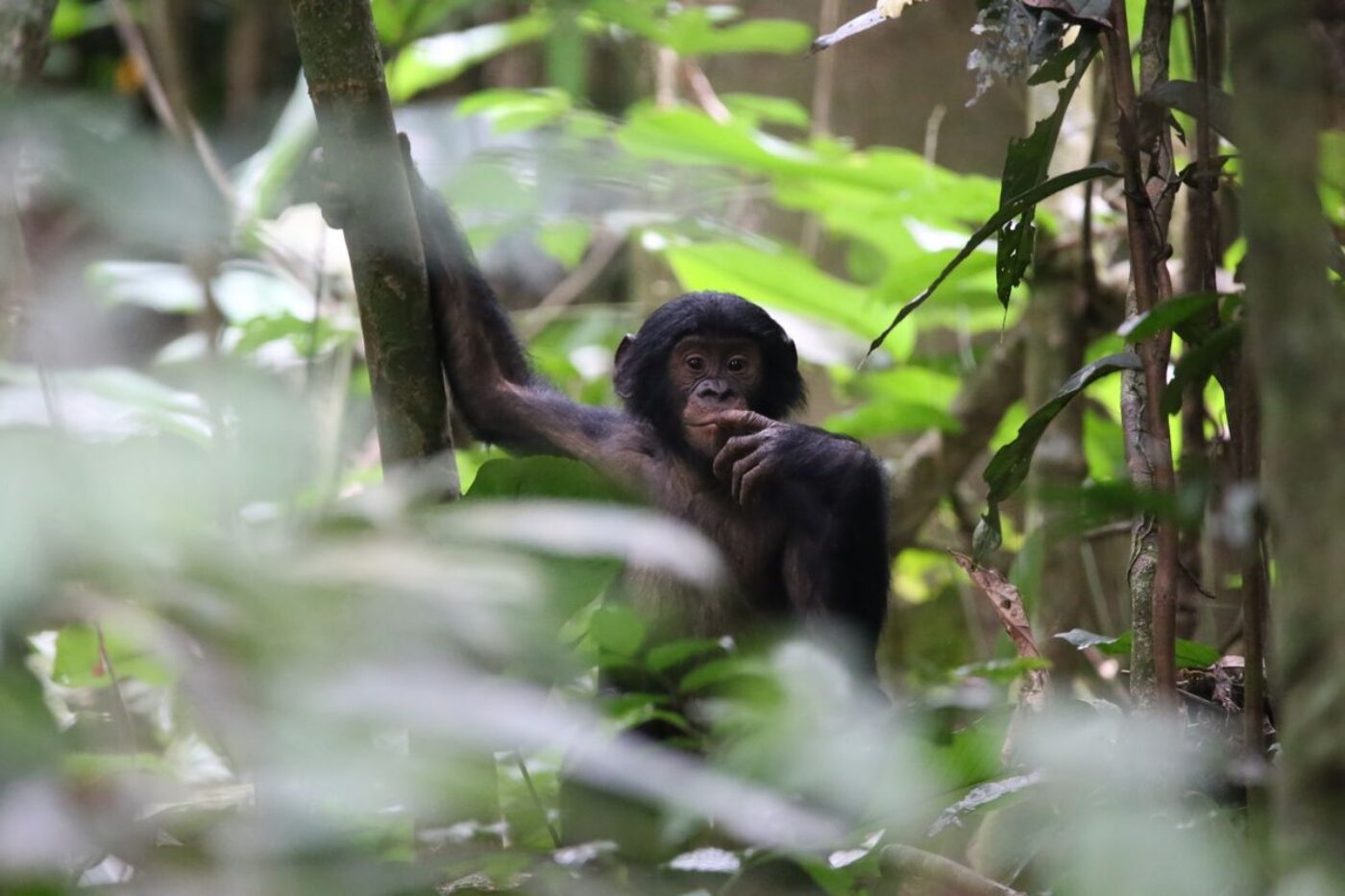
In the first quarter of 2026, the Bonobo Habituation Programme of Salonga National Park experienced a moment as rare as it was remarkable: a group of more than twenty bonobos approached the trackers’ camp at Inkomu and stayed for nearly an hour. Showing no fear, these emblematic primates—endemic to the Democratic Republic of Congo—moved calmly around the camp, alternating between walking on the ground, playing, and displaying impressive agility in the surrounding trees.
The trackers identified five pregnant females and one nursing female, an encouraging sign of the group’s overall health and vitality. Such a prolonged, calm, and confident presence is a first since the habituation programme was launched in this area.
“We stood still, almost frozen, as if invited into their world. The bonobos showed no fear; on the contrary, they seemed curious and soothed by our presence. It was an unforgettable moment,” said Felix Isafeli, Research Assistant for the Bonobo Habituation Programme.
This event marks an important milestone in the implementation of the programme. It confirms the progress made in establishing a relationship of tolerance between the bonobos and the human teams—an essential condition for the future development of responsible ecotourism centered on this unique species. It also reflects the effectiveness of the combined efforts of field teams and their partners.
By paving the way for respectful and secure observation of bonobos in their natural habitat, the programme strengthens the prospects for sustainable ecotourism capable of supporting conservation efforts while delivering tangible benefits to local communities.
This exceptional visit goes well beyond a simple anecdote: it offers a strong and encouraging signal for the teams committed to the habituation programme. It confirms the relevance of the work carried out so far and provides additional motivation to continue this demanding effort, which is essential for bonobo conservation and for the future development of sustainable ecotourism in the region.